Book a table

Our story

A kitchen that keeps the night shift

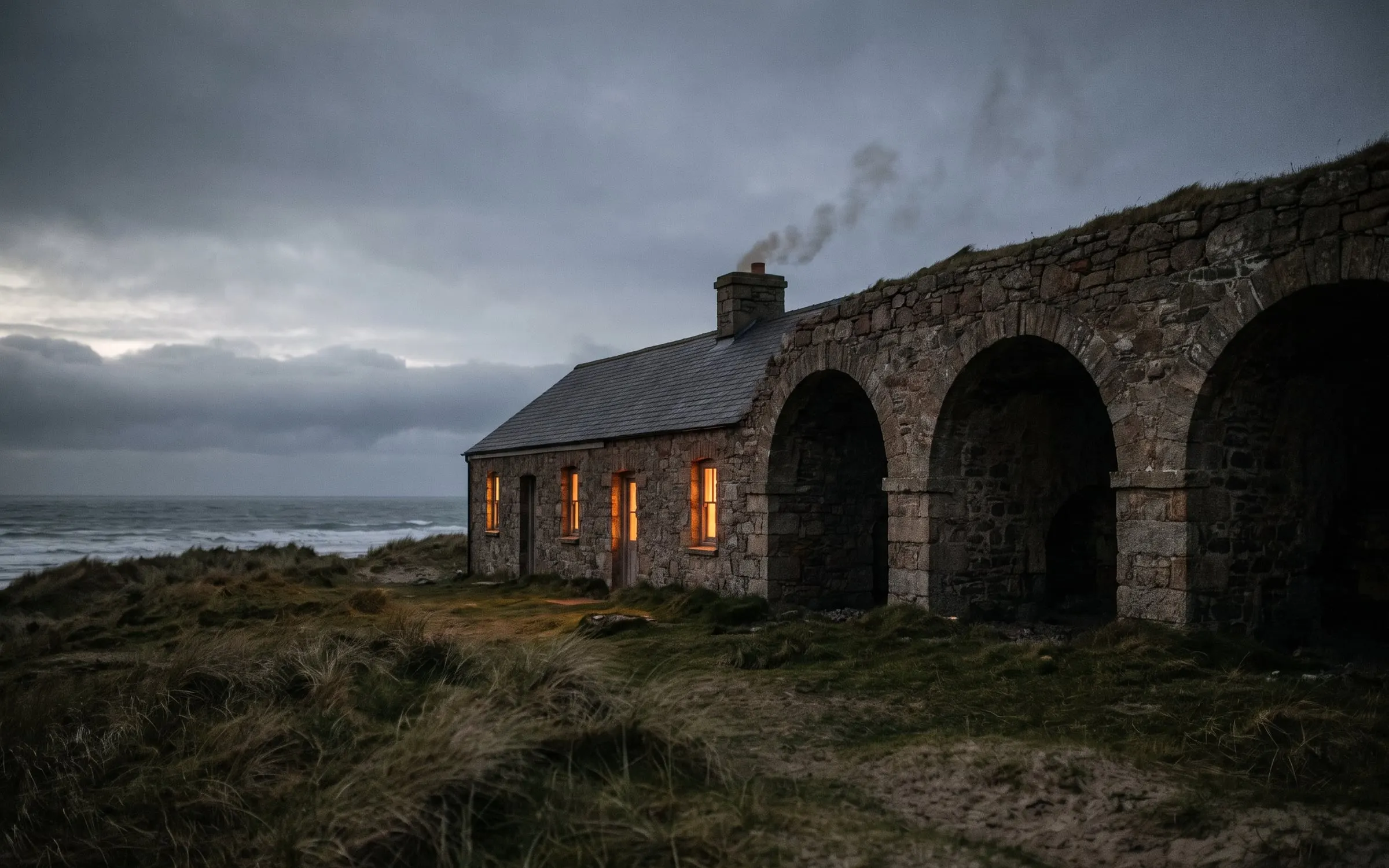
Hobthrush lives in a lime kiln built above the shore to burn stone for the fields. Now it burns oak, and cooks on the heat from noon until the next morning.

The old stone kiln building at dusk with its arched openings, lit windows and smoke rising over the dunes

The name

Named for a hob

In the old stories of the north, a hob was a small household spirit. It asked for nothing, kept out of sight, and did the work of the house through the night while everyone slept.

We liked the idea of a kitchen that works the same way. Our fire never really stops. The bread, the slow braises and the ash baked vegetables are all cooked in the hours when the dining room is dark, so that the next day can begin with something already done.
The building

Stone, lime and sea air

The kiln arches were built to burn limestone into lime for the farms inland. When the trade moved on, the building stood empty and roofless, watching the boats.

We kept the vaults, the thick whitewashed walls and the deep windows onto the sea. The old draw arch became the hearth. The long room where the lime was stored is where you eat, and the cellar below holds the Cellar Table.

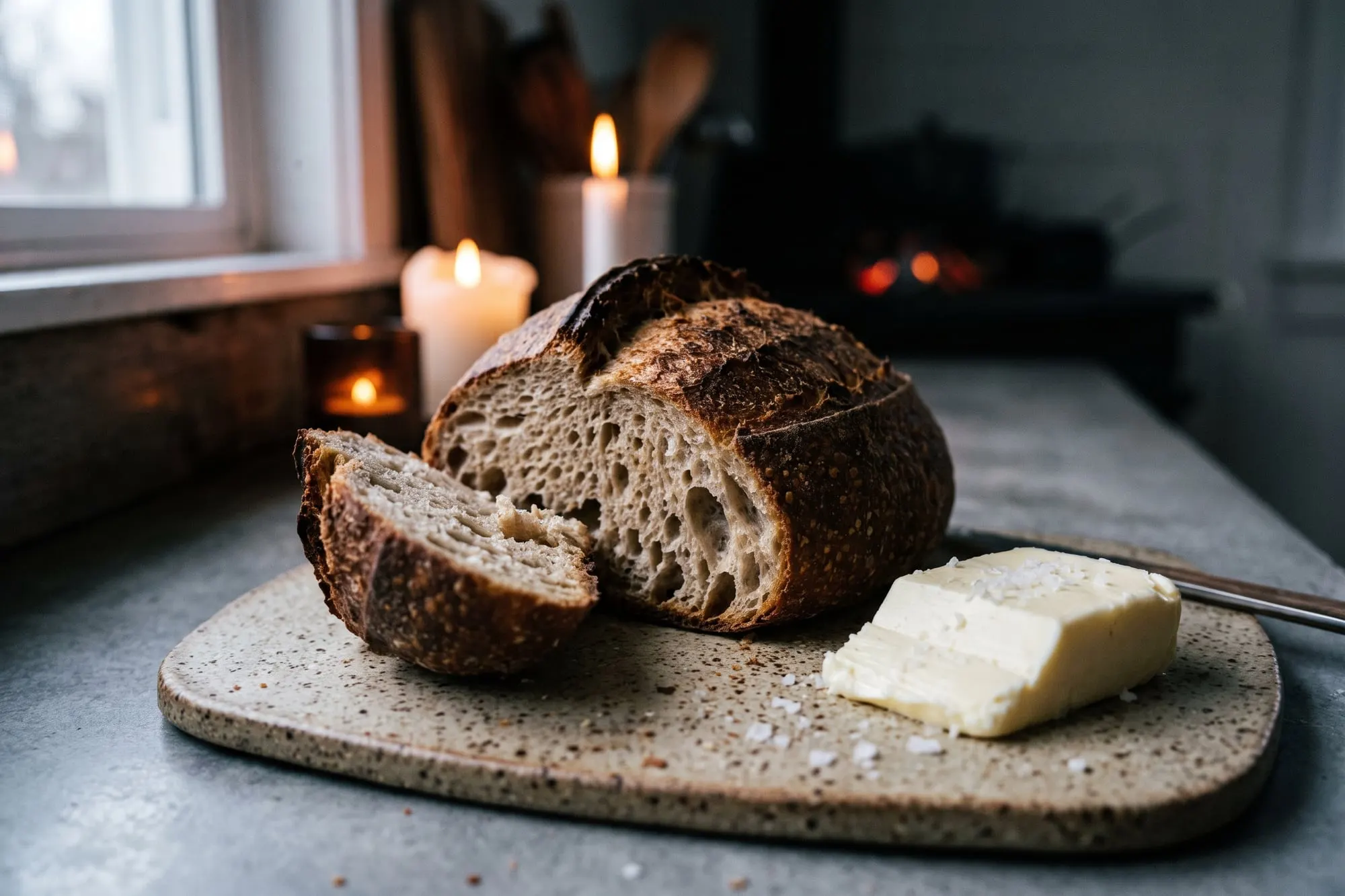
A dark crusted sourdough loaf torn open beside salted cultured butter
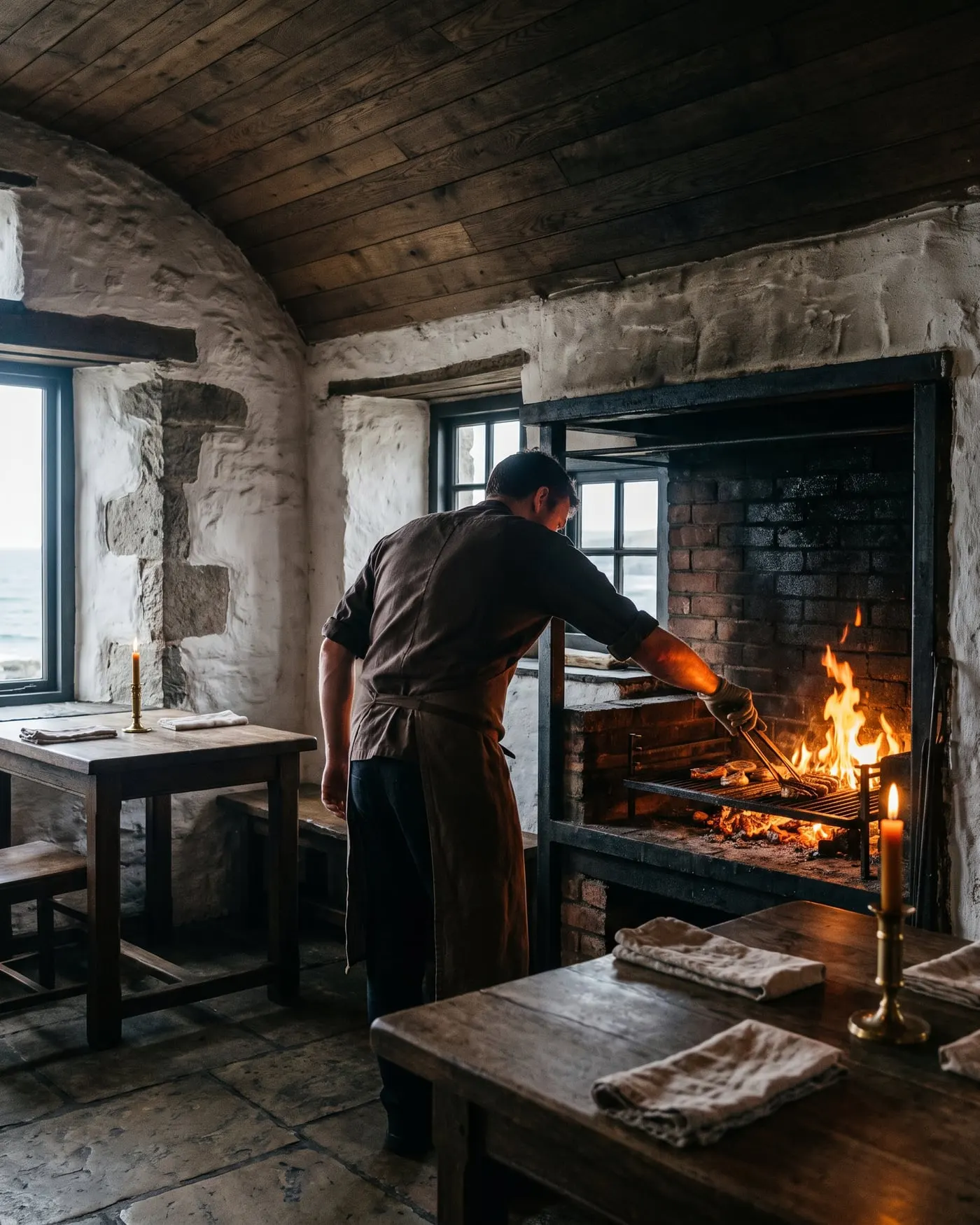
A cook seen from behind turning food on the grill over the open fire
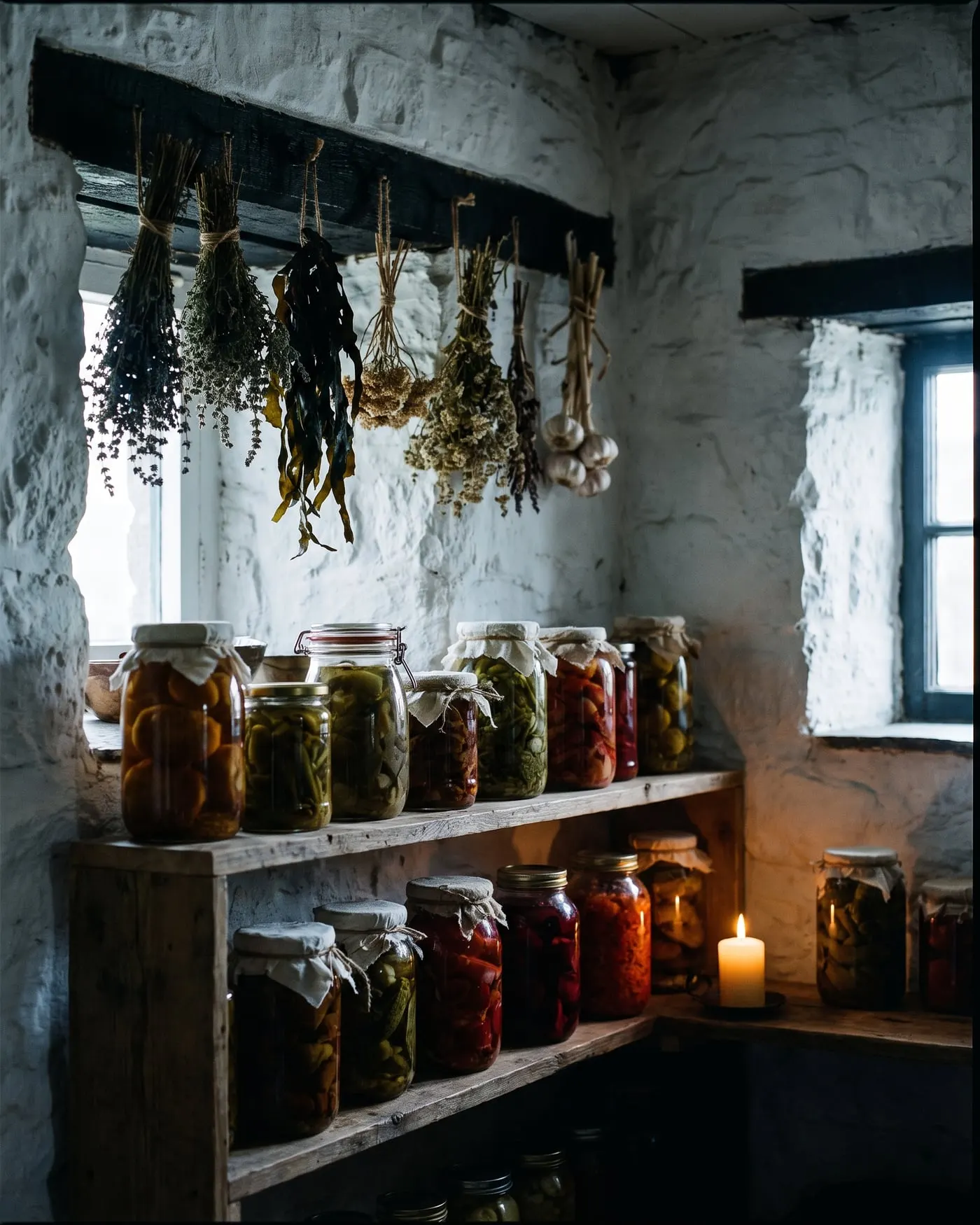
Shelves of pickles and ferments in the stone larder with herbs drying overhead
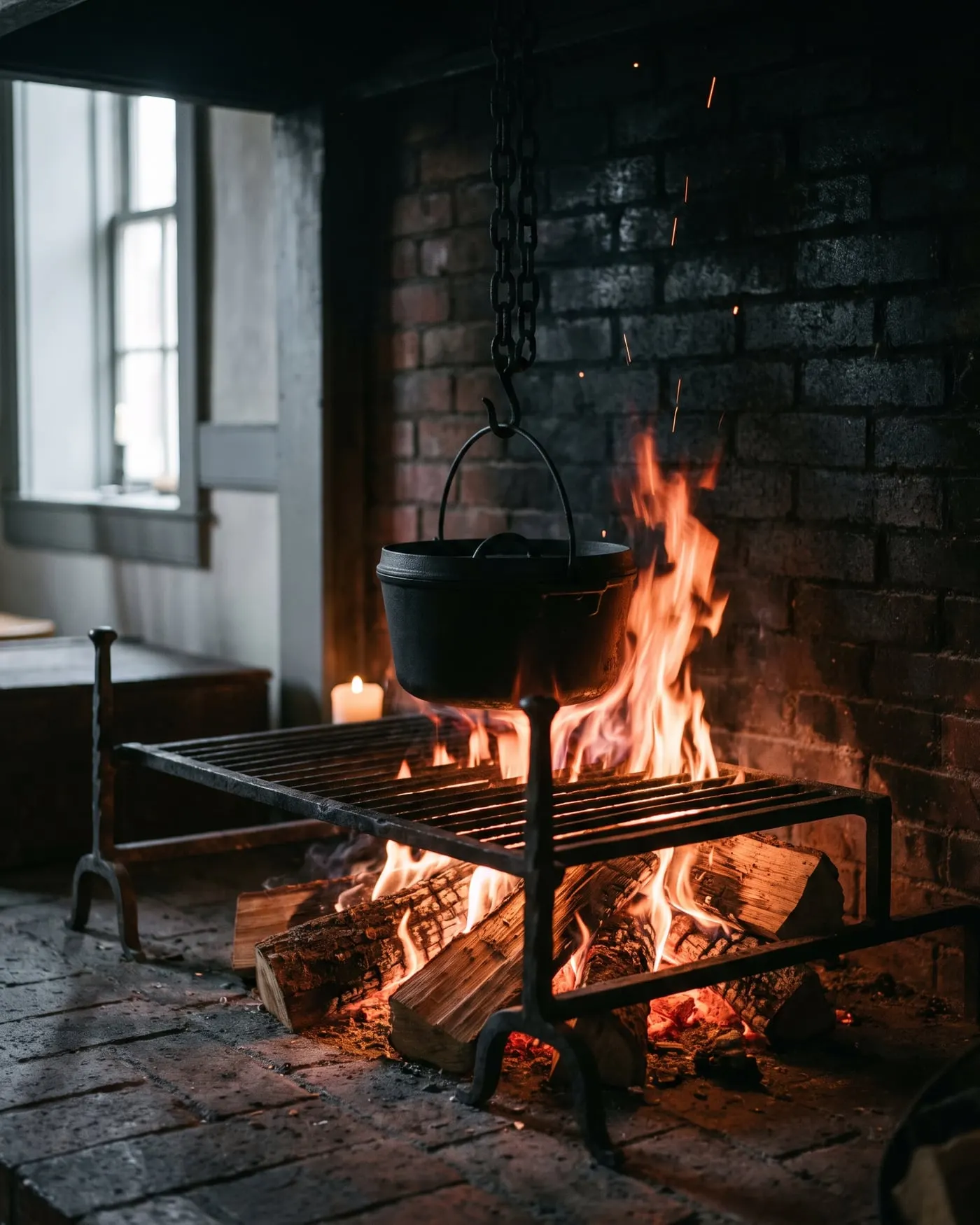
Oak logs burning tall in the open brick hearth under an iron grate

Chapter III

A day at the hearth

  1. 01First light

    The ash is raked

    The morning starts where the night left off. The hearth is still warm, so the loaves go into the bread oven on borrowed heat while leeks and celeriac are tucked into the ash.

    A dark crusted sourdough loaf torn open beside salted cultured butter
  2. 02Noon

    The fire is lit

    One cook lights the hearth with split oak and a little hawthorn and stays with it all day. Lunch is cooked while the flames are tall and quick.

    A cook seen from behind turning food on the grill over the open fire
  3. 03Afternoon

    The larder

    What the fire cannot use today goes into jars. Pickles, ferments, cured roe and seaweed salt carry the good weeks through the lean ones.

    Shelves of pickles and ferments in the stone larder with herbs drying overhead
  4. 04Late

    The fire is banked

    After the last table, the embers are pulled together and covered. A pot of beef shin goes over them, and the kitchen leaves the fire to do the night’s work.

    Oak logs burning tall in the open brick hearth under an iron grate
  • Nothing flown in
  • No gas in the kitchen
  • One fire
  • Everything from within sight of the sea
  • Nothing wasted from the hearth

Chapter IV

Where it all comes from

We buy from people we can visit. If it cannot reach the kiln by road in a morning, it does not go on the menu.

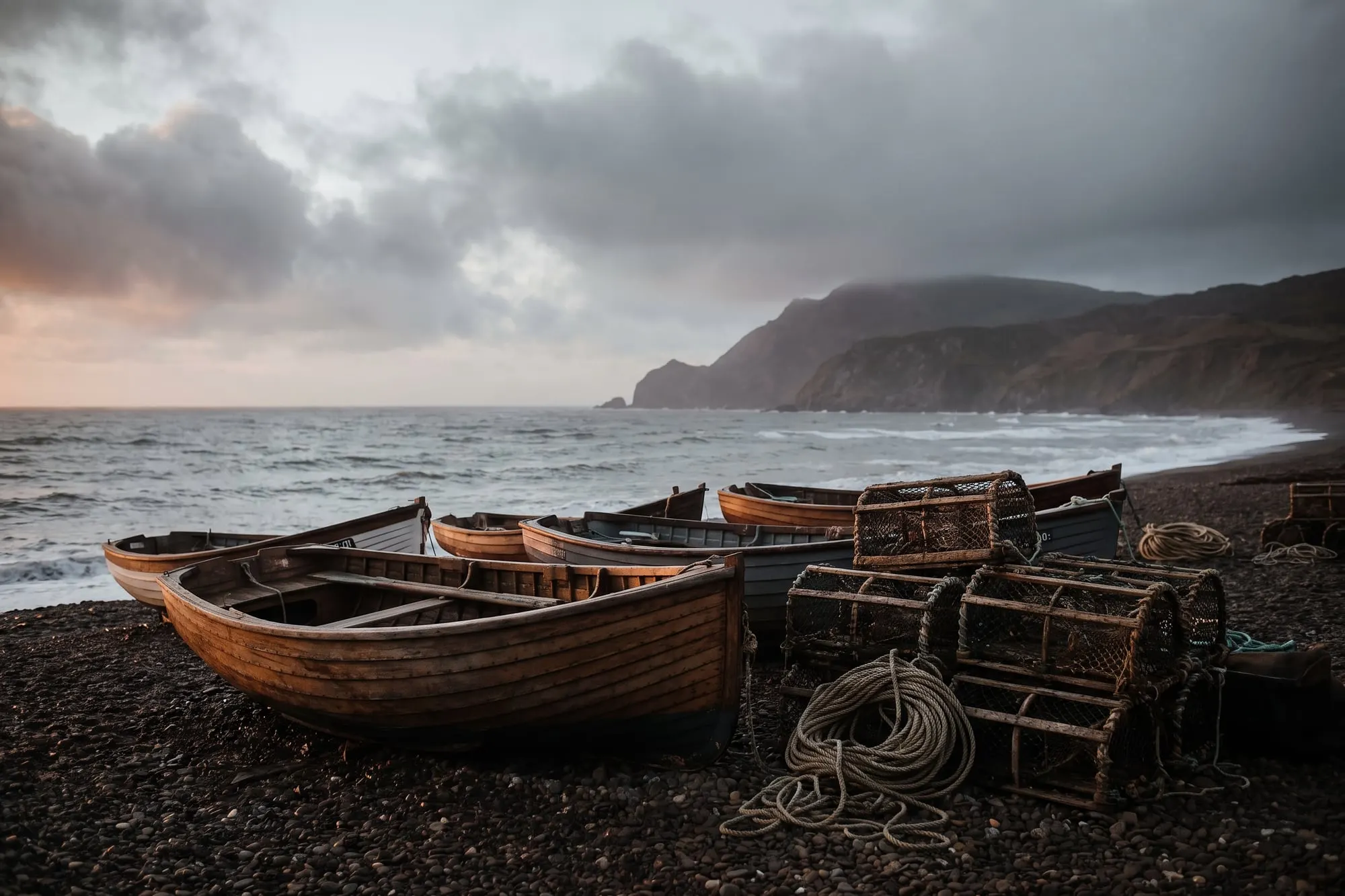
Wooden fishing boats and lobster pots on a shingle beach at first light
WhatWhere fromWhen
Crab, lobster and white fishThe small boats in the harbour below the kilnOn days the boats go out
Dulse, kelp and sea kaleThe rocks at the foot of the headlandGathered at low water
Heritage wheat and ryeA farm on the headland, milled nearbyHarvested late summer
Hogget and beefHill farms inland, towards the moorsThrough autumn and winter
Heather honeyHives on the moor edgeLate summer
Oak and hawthornFallen and thinned wood from local estatesSeasoned for the year ahead